A showcase site and a sales funnel aren’t just two technical terms to discuss with your webmaster. They’re two very different ways of handling the money you invest online. The first shows who you are. The second guides a person through the process until they submit a contact request, make a reservation, or make a purchase. If you’re paying for advertising and the phone isn’t ringing, the problem is rarely the color of the button—it’s almost always the site’s structure.
Many small and medium-sized businesses have a stylish, up-to-date, and even well-written website. But then they receive a few requests, they don't know where the leads are coming from and respond to them only after the leads have already chosen a competitor. That's not a sales presence—it's an expensive business card left on a table full of other business cards.
Showcase Website or Sales Funnel: The Difference That Matters
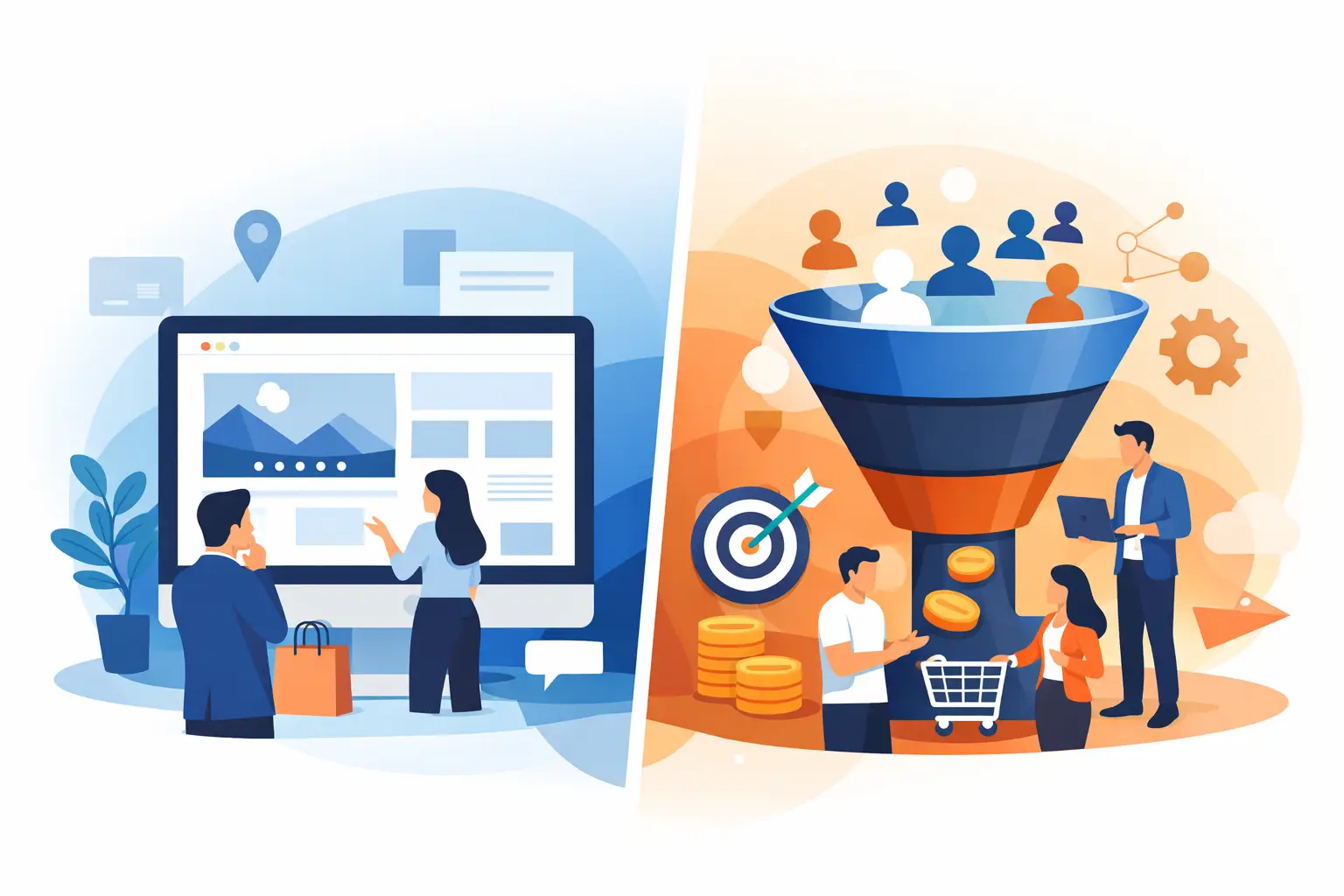
A showcase website introduces the company: its services, history, team, portfolio, contact information, and perhaps a blog and reviews. It’s designed for people who search for your name, want to verify that you exist, or need to quickly compare what you offer. It can be useful, credible, and necessary. But it isn’t automatically designed to convert cold traffic.
A funnel is a path designed to lead to a specific action. A person sees an ad, lands on a page that matches what they clicked on, understands the value of the offer, and takes the next step: they provide their information, schedule a call, request a quote, or make a purchase. Each element reduces friction and uncertainty.
The distinction is simple. A showcase website answers the question, “Who are you?” The sales funnel answers, “Why should I contact you right now?” For a company that wants to generate revenue, the second question is the one that pays salaries, suppliers, and fuels growth.
Please note: This doesn't mean that a showcase website is useless or that every business should get rid of it. The point is to stop expecting a showcase website to do the work of a salesperson. They are different tools with different objectives.
When a Showcase Website Is the Right Choice
A showcase website works well when demand is already high and the potential customer has a clear intention. Think of a well-known local professional practice, a restaurant that needs to provide menus, hours, and reservations, or a B2B company dealing with bids, client references, and lengthy purchasing processes. In these cases, you need credibility, in-depth information, and an online presence that reinforces the quality perceived offline.
It’s also useful when you have many service lines or different target audiences. A company that offers consulting, training, and technical support can’t cram everything onto a single landing page. It needs a structure that can guide different visitors without causing confusion.
The limit is reached when you drive paid traffic to the home page and hope the user will find the right path on their own. An ad promising a consultation to reduce energy costs shouldn’t lead to a page listing ten services, the team, the mission statement, and a generic form at the bottom. That person shouldn’t have to explore. They need to know within seconds that they’re in the right place.
When the Sales Funnel Beats the Showcase Website
If you invest in Google Ads, Meta Ads Whether it's TikTok Ads or any other platform, the funnel is almost always the most rational choice for campaigns. You're paying for every visit. Letting visitors wander aimlessly through menus, corporate pages, and distractions is like paying a salesperson to walk a prospect to the door and then let them walk away.
A funnel is particularly effective when you’re presenting a specific offer: an initial consultation, a quote, a demo, a treatment, a course, a site visit, a product, or a promotion with clear terms. The more concrete the desired action is, the more sense it makes to create a focused page.
You don’t need magic formulas. You need a message, proof, and a process. The message must address the problem or the result the customer wants to achieve. The proof must eliminate risk: real-life examples, methodology, verifiable numbers, expertise, and relevant testimonials. The next step should involve an action commensurate with the level of trust. For a service costing thousands of euros, asking for a phone call may be appropriate. For a local business, a WhatsApp message or a reservation might convert better.
An effective funnel isn't an aggressive page full of fake countdowns and far-fetched promises. That's hard-sell tactics disguised as marketing. A good funnel is clear: it identifies a need, explains what happens next, and makes it easy to take the first step.
The false dilemma: You need both to grow
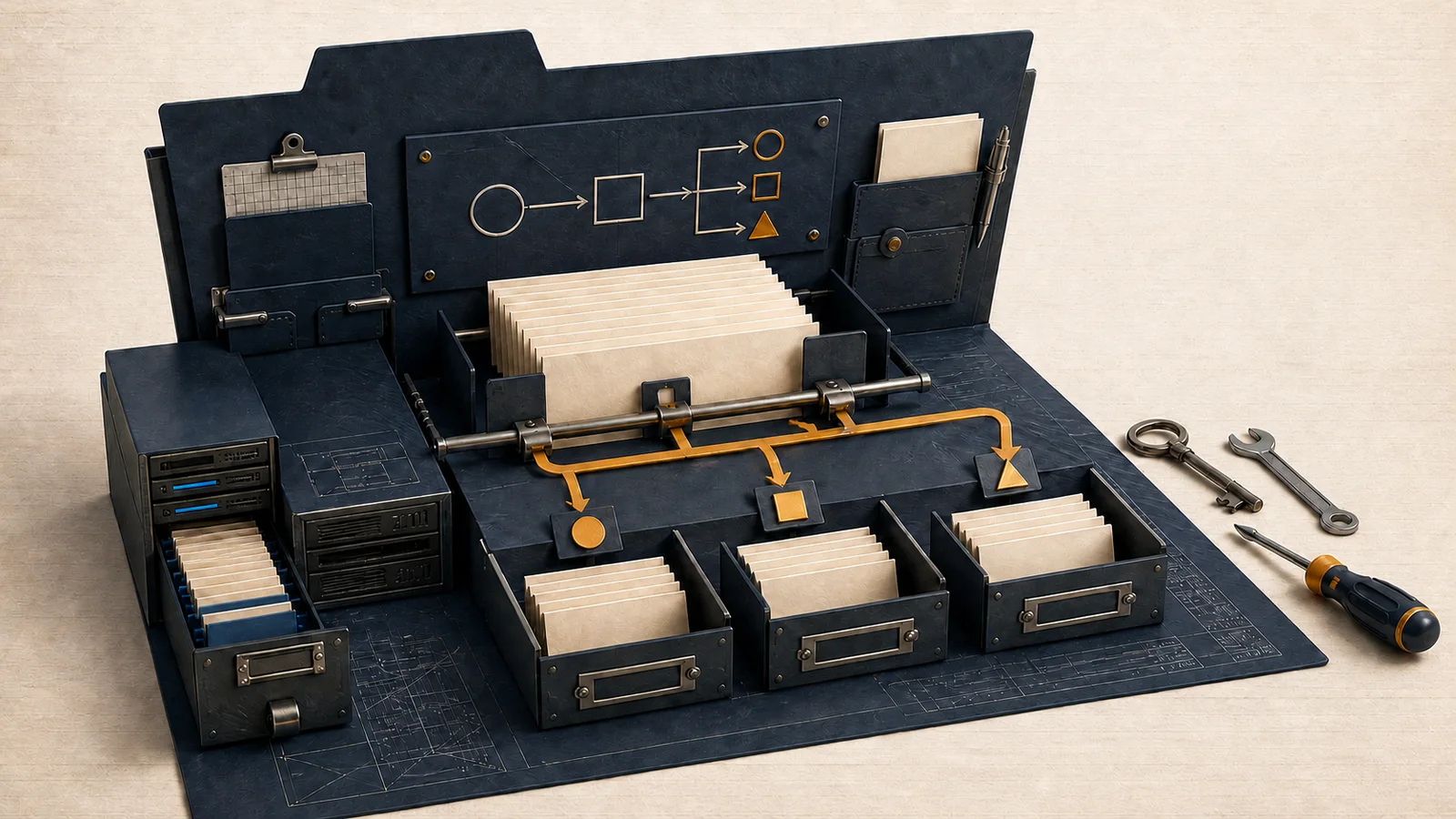
In most cases, the best choice isn’t between a showcase site and a sales funnel. It’s an ecosystem where each component plays its own role. The website builds trust, organic search rankings, and credibility. Landing pages convert campaigns into measurable leads. The CRM collects inquiries. Automations ensure that no lead is overlooked. The sales team receives useful information to follow up effectively and promptly.
This step is the difference between “we ran an ad” and “we know how much it costs us to acquire a customer.” If you don’t know the cost per lead, the appointment conversion rate, the sales generated, and the response time, you’re not managing a sales channel. You’re just hoping for the best.
For example, a cosmetic clinic might have a comprehensive website covering treatments, staff, locations, and FAQs. For a campaign focused on laser hair removal, however, a dedicated landing page is needed: benefits, service area, availability, social proof, and a form or booking option. The lead is entered into the CRM, receives an immediate confirmation, and the team is notified. The campaign doesn’t stop at collecting a name—it creates a process.
Mistakes That Eat Into the Budget
The first mistake is directing all traffic to the home page. The second is using a single, generic form, in the hope that anyone will fill it out. The third is measuring only visits and “likes”—numbers that say nothing about the commercial quality of the traffic.
Then there’s an even costlier mistake: building a landing page once and leaving it unchanged for two years. Offers change, customer objections change, advertising costs change, and the creative content that drives traffic changes. A page that isn’t tested, updated, and aligned with the sales process quickly stops working.
Even the sales funnel can fail if the offer is weak or if the follow-up is slow. No page can save a company that takes three days to respond to a lead. Conversion doesn’t end when you click “submit”—it begins there. For many small and medium-sized businesses, improving response speed and the quality of their replies is more valuable than immediately increasing their ad budget.
How to Make Decisions Without Complicating Your Life
Start with a tough question: What do you want a person to do after they arrive on your site? If the answer is “learn about the company,” what you need most is a solid showcase website. If the answer is “request a quote for this service,” “book a consultation,” or “purchase this offer,” you need a sales funnel.
Next, look at where your traffic is coming from. People who search for your brand or arrive via word of mouth need reassurance and information. Those who arrive from a cold ad need consistency between the promise, the page, and the call to action. Mixing the two paths reduces clarity and often lowers the conversion rate as well.
Finally, consider your operational capacity. A funnel that generates twenty leads a month is useless if no one calls them, qualifies them, or follows up with them. Before scaling up your traffic, build your management system: notifications, CRM, reminders, follow-up sequences and clear responsibilities. This is where many companies end up losing customers to faster competitors.
Digital technology must evolve alongside business
The real problem isn’t choosing once and for all between a showcase site and a sales funnel. It’s relying on a static project while the market is constantly changing. A new offer, a successful campaign, a recurring objection, or a change in the sales process all require quick action. If, to modify a page, you have to reopen a quote, wait weeks, and discuss every single detail, you lose the advantage of digital.
That’s why WebWakeUp focuses on the entire infrastructure, not just on delivering web pages: the website, sales funnels, advertising, CRM, and automation tools must all work together and improve over time. Not to add unnecessary technology, but to achieve something very concrete: transforming attention into manageable business opportunities.
Don't ask yourself if your website looks good. Ask yourself if every visitor knows what to do, if every inquiry receives a response, and if you can show how many sales come from digital channels. That's where a sensible decision comes from—and, above all, a system that stops costing money and starts delivering results.