
Is Your Website Turning Customers Away? Your website’s design may have actually impacted your sales over the past year…
Imagine walking into a store where everything is in disarray, dust covers the shelves, and the lighting is so dim that you can barely make out the products. That’s exactly the effect a poorly designed website has on your visitors. It’s like inviting your customers into a dark, confusing maze, where every click takes them further away from the checkout instead of bringing them closer.
If your website were a salesperson, it would be the kind who never showers, mumbles incomprehensibly, and wears torn clothes. A visual and functional disaster that not only drives customers away but sends them straight into the arms of the competition.
Why a Poorly Designed Website Is a Problem:
- First Impressions Count: In the digital world, your website is the face of your business. A poor design is like having a dirty, cluttered storefront. Customers will just walk right by without giving you a second chance.
- Usability and User Experience: A poorly designed website often means a terrible user experience. If visitors can’t navigate it easily, they’ll find someone else who can meet their needs with less frustration.
- Credibility and Trust: An outdated or unprofessional design screams “we don’t care!” to your potential customers. Trust is the currency of the digital world, and a bad-looking website doesn’t pay off.
- Conversions and Sales: The ultimate goal of a website is to convert visitors into customers. An unattractive and unintuitive website is like a clumsy and ineffective salesperson.
How to Spot a Bad Website: Fundamental Principles of Web Design
It might not be so obvious whether your website is actually bad.
A Quick Note: Not everyone is able to spot a poorly designed website, because it’s not just a matter of taste or aesthetic sensibility, but also of expertise in web design, SEO, and so on. That’s why it’s important to rely on an expert who can analyze your site and guide you, even on a technical level—not just an aesthetic one:
✋ WHAT IF YOU COULD PUT EVERYTHING YOU'RE READING INTO PRACTICE RIGHT AWAY, WITHOUT ANY UPFRONT COSTS?
You're reading this article because you know that technology can help your business grow, but…
How many times have you found yourself stuck because of technical issues or developers who just vanished?
With WebWakeUp, rent an entire Technical and marketing department for the price of a simple monthly subscription.
No upfront costs. No surprises. No wasted time.
If you’d still like to try to figure it out on your own, here are some red flags and key principles to keep in mind:
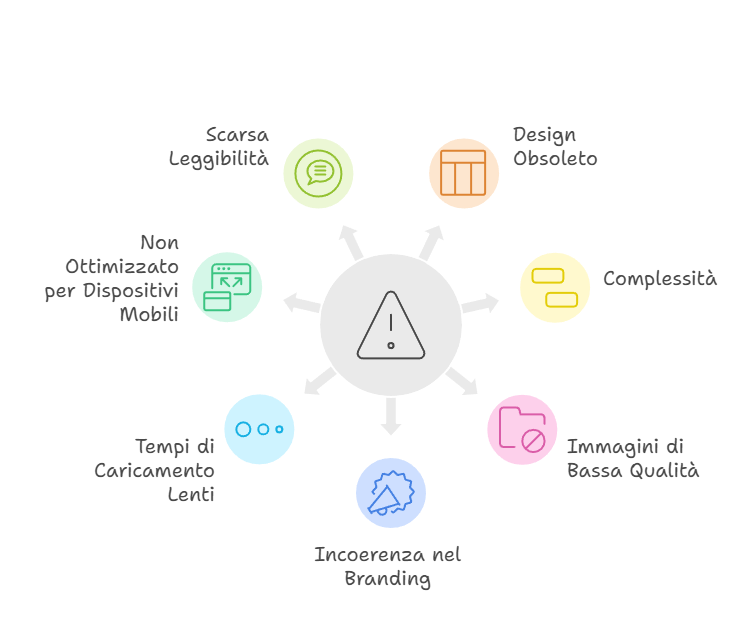
- Dated or Outdated Design: A website that looks like it’s stuck in the past is a clear sign of neglect. The design should evolve with current trends to stay fresh and relevant.
- Complexity and Confusion: If your website is a maze of menus, submenus, and links, it’s time to simplify it. An effective design intuitively guides users to the information or actions they’re looking for.
- Low-Quality Images: Blurry, low-resolution, or irrelevant images are a big no-no. High-quality images enhance your website’s visual appeal and professionalism.
- Lack of Consistency in Branding: Your website should reflect your brand in every aspect, from colors to tone of voice. A lack of consistency can cause confusion and undermine trust in the brand.
- Long Loading Times: In an age of instant digital gratification, a website that takes forever to load is commercial suicide. Optimizing loading speed is crucial.
- Not Mobile-Friendly: With most web traffic coming from mobile devices, a website that isn't optimized for these devices is practically useless.
- Poor Readability: Text that is difficult to read—whether due to its size or because it doesn’t stand out against the background—drives users away. Clarity is essential.
Fundamental Principles of Good Web Design:
- Simplicity: A clean, minimalist design is often the most effective.
- Usability: The website should be easy and intuitive to navigate.
- Responsiveness: The design must adapt perfectly to all devices and screen sizes.
- Speed: Optimize for fast loading speeds.
- SEO-Friendly: Good design should also support search engine optimization.
Incorporating these elements into your website will not only improve its visual appeal but also make it more effective at reaching and engaging your target audience.
How to Revamp Your Website: All is not lost. Here are some essential steps to transform your website from an ugly duckling into a digital swan:
- Review and Update the Design: Consult a web design expert. Sometimes, small changes can make a big difference.
- Improve Usability: Make sure your website is easy to navigate, with a clear and intuitive layout.
- Update Content: Content must be relevant, engaging, and up-to-date. Don’t underestimate the power of good copywriting.
- Optimize for Conversions: Every element of your website should guide the user toward the desired action, whether it’s a purchase, a sign-up, or a contact request.
A poorly designed website isn't just an aesthetic issue; it's a serious obstacle to your business's success.
With the right strategies, you can turn your website into a powerful sales tool.
Don’t wait for your competitors to steal the spotlight; it’s time to take the first step toward a website that not only looks great but also effectively drives sales.
Because today more than ever, your website directly impacts your sales—even if you run a local business and think your online presence is secondary. To learn more, schedule a no-obligation call, and we’ll explain how we can help you:
✋ WHAT IF YOU COULD PUT EVERYTHING YOU'RE READING INTO PRACTICE RIGHT AWAY, WITHOUT ANY UPFRONT COSTS?
You're reading this article because you know that technology can help your business grow, but…
How many times have you found yourself stuck because of technical issues or developers who just vanished?
With WebWakeUp, rent an entire Technical and marketing department for the price of a simple monthly subscription.
No upfront costs. No surprises. No wasted time.